Dobry Merge — 8-bit gamification for a brand
Concept, visual style, and design of a pixel-art merge game for the Dobry WinBox app — from style exploration and prototypes to release
A game inside an app — why?
Dobry WinBox is the brand app for 'Dobry' where users scan receipts, earn points, and redeem prizes. A classic loyalty program. The problem — engagement: people come in to scan a receipt and leave. Between purchases, the app is dead.
The key client objective: natively drive purchases of Dobry products bundled with snacks — chips, candy, treats. The mechanic needed to not just bring users back daily, but organically nudge them toward purchases. The solution — a game. Not a basic 'spin the wheel' mini-game, but a full gameplay experience people actually want to play.
20+ concepts before finding the style
The first month I didn't design screens — I searched for a visual language. Merge games on the market look the same: bright 3D icons, candy aesthetics, cluttered interfaces. I needed to break away from this while keeping the genre recognizable.
I explored dozens of directions: flat, neon, isometric, sketch, low-poly. For each, I created a quick mockup of the game board and tried fitting the Dobry product line. Most options fell apart at the 'how does a cola bottle look here?' stage.
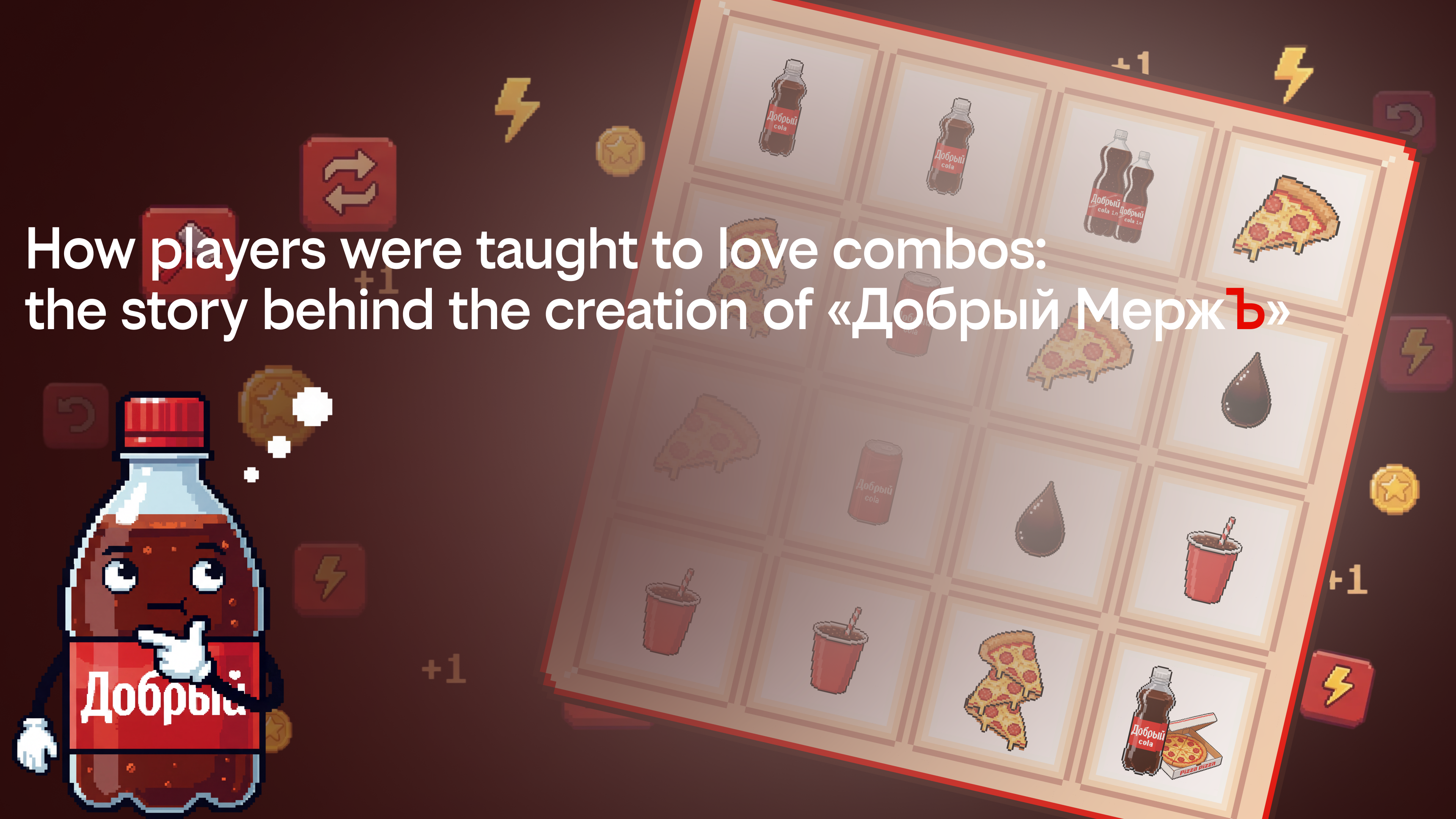
8-bit won for a reason. Pixel art delivers nostalgia, recognition, and — crucially — lets you create emotional characters from ordinary products. A Dobry Cola bottle with pixel eyes and bubbles is no longer just a product — it's a character you care about.
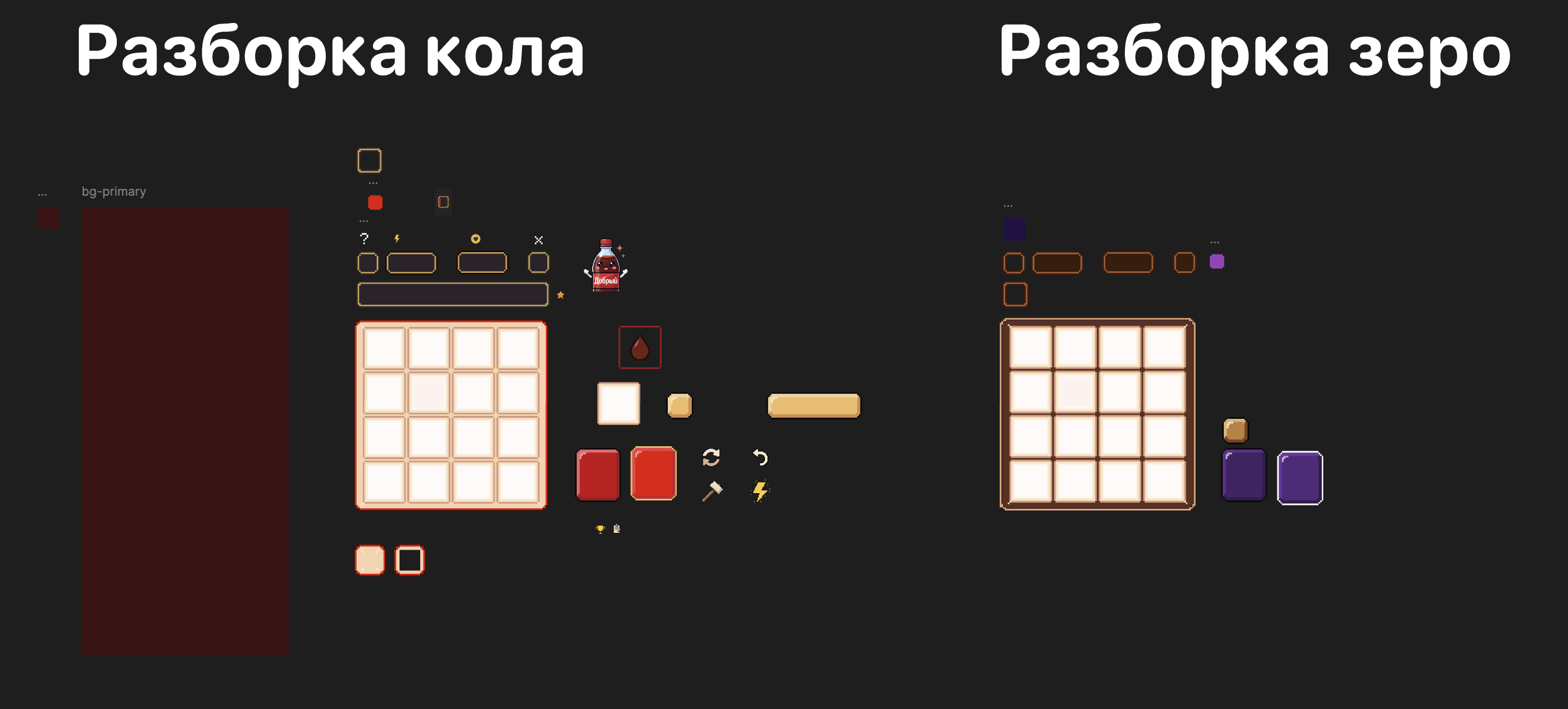
UI component breakdown: Cola theme and Zero theme
Mechanics: simple outside, complex inside
Merge mechanics seem simple: combine matching items, get new ones. But behind that simplicity lies a massive layer of logic. Which items appear at which level? How many cells on the board? How to balance difficulty so it's not too easy and not frustrating?
I designed the merge tree — a chain of transformations from basic elements to final products. Each branch is a separate path with bonuses, combos, and surprises. In parallel, I designed the economy: energy, coins, boosters. All tested on paper prototypes first, then Figma prototypes.
A separate challenge — integration with the loyalty program. Game achievements need to convert into real WinBox points without breaking the app's economy.
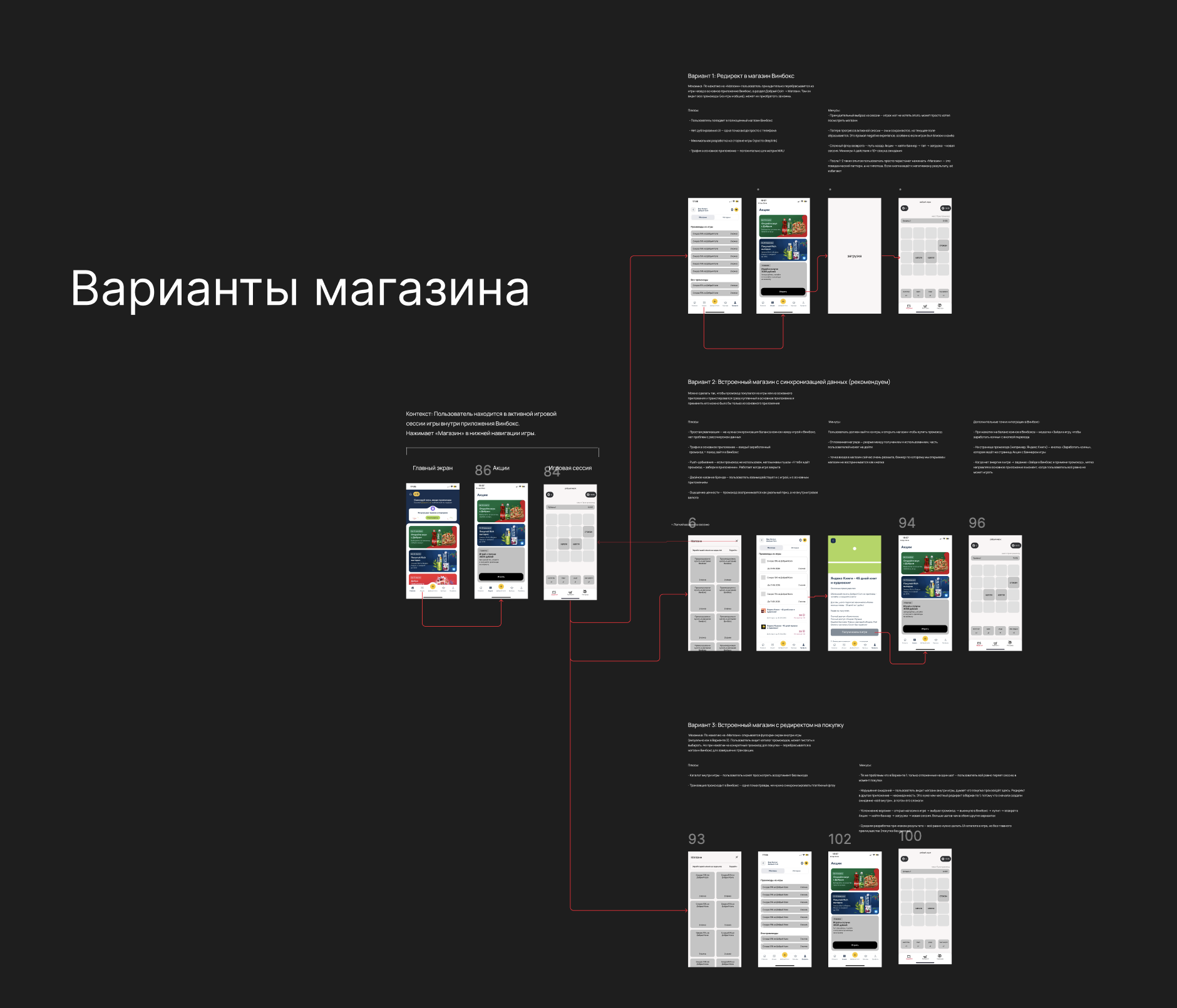
Store variants: three approaches to WinBox integration
From paper to pixels
First prototypes were paper-based — cards on a table, moved by hand. This quickly validated whether the core loop works: 'merge → get something new → want more'. It did.
Then I moved to Figma: interactive prototypes with merge animations, combo effects, screen transitions. At this stage it became clear that a 4x4 board is optimal: enough room for strategy without overwhelming the mobile screen.
Every iteration was shown to the team and tested on people far from game design. If someone who doesn't play merge games got hooked within 30 seconds — the mechanic works.
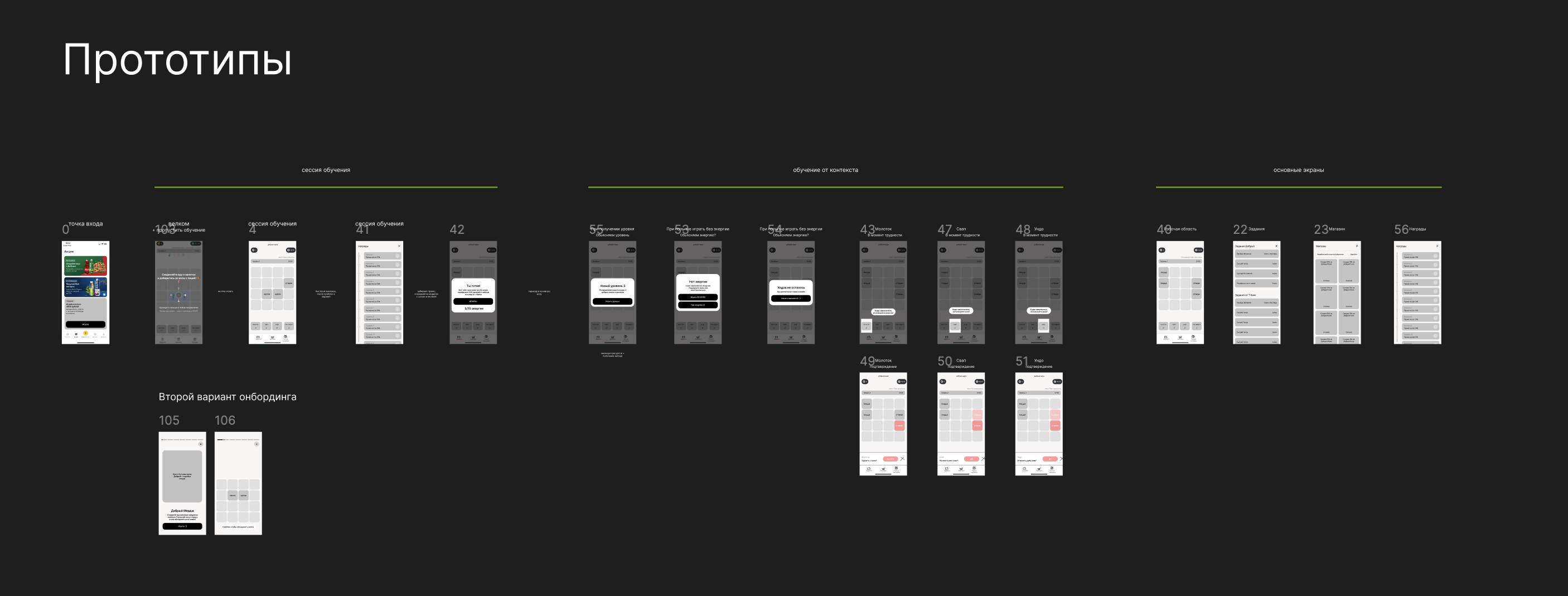
Prototypes: onboarding sessions, contextual learning, core screens
The emotional bottle: how a product became a character
The key game element — the pixel Dobry Cola bottle. Not just an icon, but a full character with emotions: happy on a good merge, sad when the board is full, encouraging during combos.
I drew dozens of states: idle, happy, sad, excited, sleepy. Each one — pixel by pixel, with sub-pixel animation. The bottle became the game's mascot and the element that sets Dobry Merge apart from any other merge game on the market.
This approach worked for the brand too: the product stopped being 'advertising inside a game' and became part of the gameplay. Users aren't annoyed — they get attached.
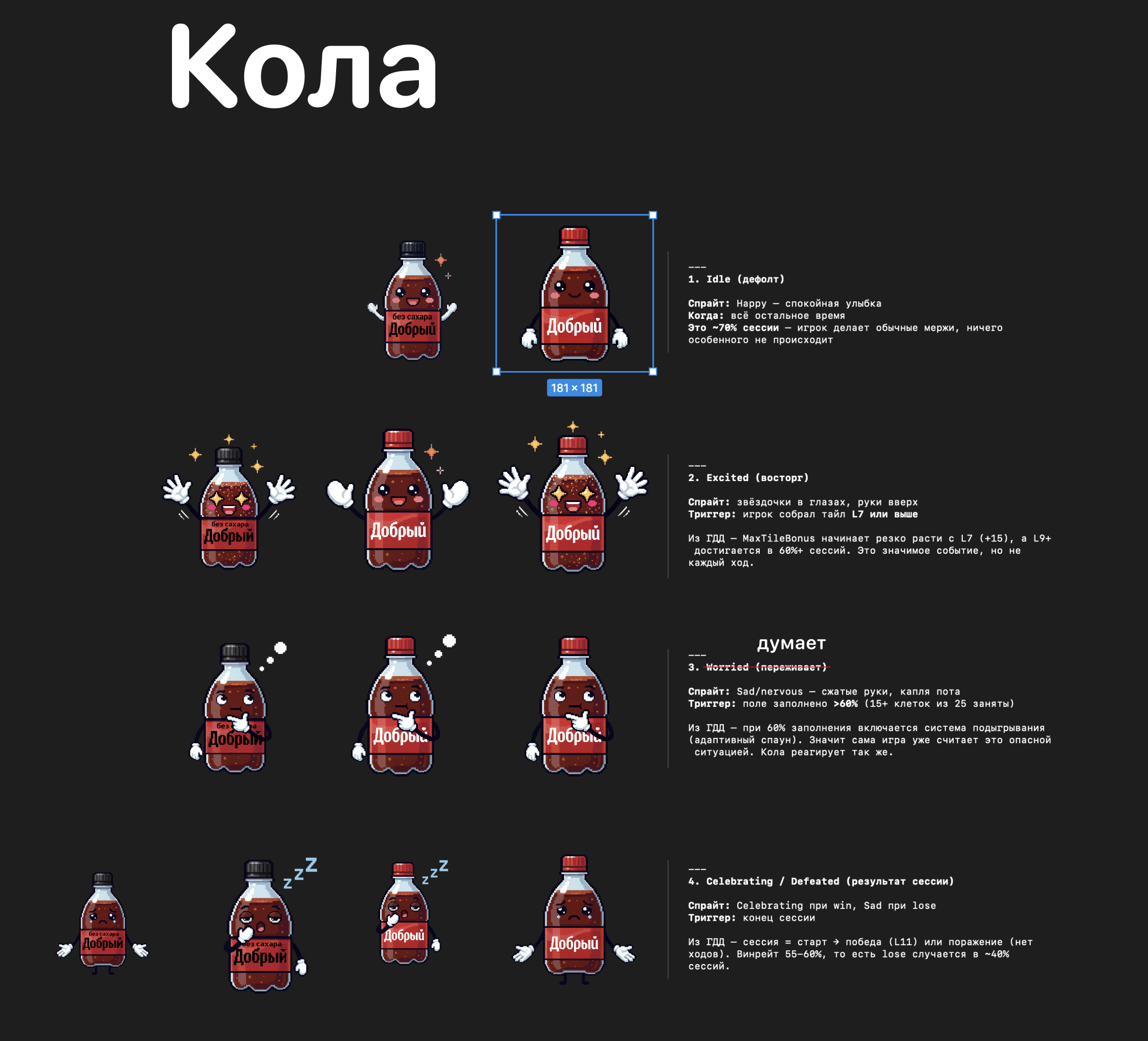
Mascot states: idle, excited, worried, celebrating / defeated
Game screens: every pixel in place
The visual style — an intentionally limited palette, large pixels, minimal UI elements over the game board. I wanted the interface to stay out of the way. All secondary elements — energy, score, boosters — are pushed to the periphery.
I separately designed the feedback system: merge animations, combo effects, haptic feedback on successful moves. In pixel art this is especially important — without animation the screen looks static, but with it — it comes alive.
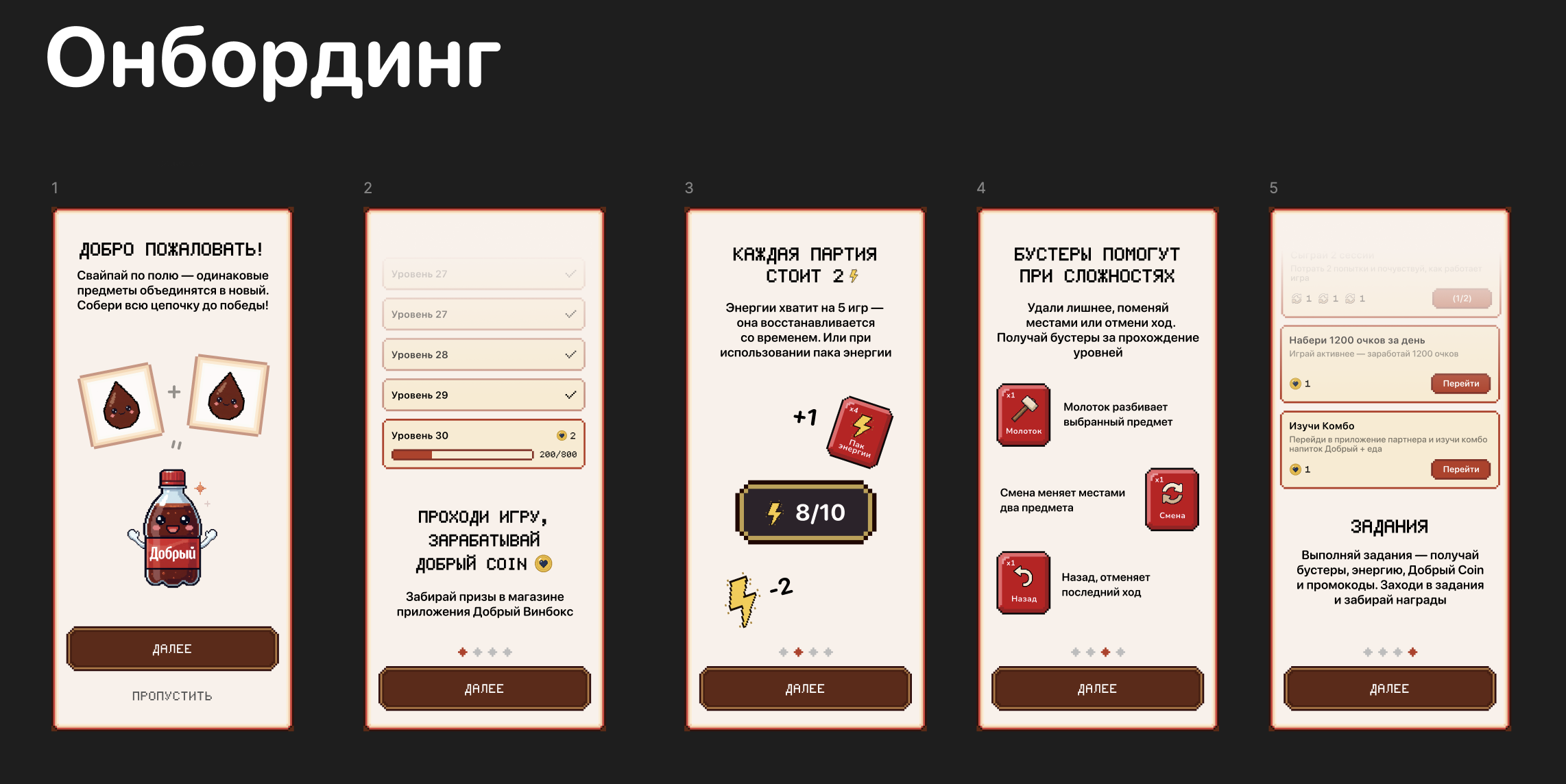
Onboarding: 5 steps — from merge mechanics to quests and boosters
Release and results
Dobry Merge shipped inside the Dobry WinBox app. The game is available to all app users.
My responsibility as a product designer:
— Developed the visual style from scratch — from moodboards to the final 8-bit aesthetic — Created the pixel mascot — an emotional bottle with dozens of states — Drew all game assets in pixel art — Conducted multiple rounds of prototyping and playtesting — Designed all screens and the game interface
Game mechanics, economy, and loyalty program integration were a team effort.